- Android Studio Sdk For Mac
- Android Studio Sdk Path For Mac
- Android Studio Sdk Manager Missing Mac
- Android Sdk Download Mac
Install Visual Studio for Mac behind a firewall or proxy server. To install Visual Studio for Mac behind a firewall, certain endpoints must be made accessible in order to allow downloads of the required tools and updates for your software.
- The Android SDK is composed of modular packages that you can download separately using the Android SDK Manager. For example, when the SDK Tools are updated or a new version of the Android platform.
- At the core of Android Studio is an intelligent code editor capable of advanced code completion, refactoring, and code analysis. The powerful code editor helps you be a more productive Android.
The Android SDK is composed of modular packages that you can download separately using the Android SDK Manager. For example, when the SDK Tools are updated or a new version of the Android platform is released, you can use the SDK Manager to quickly download them to your environment. Simply follow the procedures described in Adding Platforms and Packages.
What's New:
- A command-line version of the Apk Analyzer has been added in tools/bin/apkanalyzer. It offers the same features as the Apk Analyzer in Android Studio and can be integrated into build/CI servers and scripts for tracking size regressions, generating reports, and so on.
- ProGuard rules files under tools/proguard are no longer used by the Android Plugin for Gradle. Added a comment to explain that.
- When creating an AVD with avdmanager, it is no longer necessary to specify --tag if the package specified by --package only contains a single image (as is the case for all images currently distributed by Google).
There are several different packages available for the Android SDK. The table below describes most of the available packages and where they're located once you download them.
29.0.1 (June 2019) Command-line tools:
adb
- Hotfix for Windows crashes (https://issuetracker.google.com/134613180)
Available Packages:
- SDK Tools
- Contains tools for debugging and testing, plus other utilities that are required to develop an app. If you've just installed the SDK starter package, then you already have the latest version of this package. Make sure you keep this up to date.
- SDK Platform-tools
- Contains platform-dependent tools for developing and debugging your application. These tools support the latest features of the Android platform and are typically updated only when a new platform becomes available. These tools are always backward compatible with older platforms, but you must be sure that you have the latest version of these tools when you install a new SDK platform.
- Documentation
- An offline copy of the latest documentation for the Android platform APIs.
- SDK Platform
- There's one SDK Platform available for each version of Android. It includes an android.jar file with a fully compliant Android library. In order to build an Android app, you must specify an SDK platform as your build target.
- System Images
- Each platform version offers one or more different system images (such as for ARM and x86). The Android emulator requires a system image to operate. You should always test your app on the latest version of Android and using the emulator with the latest system image is a good way to do so.
- Sources for Android SDK
- A copy of the Android platform source code that's useful for stepping through the code while debugging your app.
- Samples for SDK
- A collection of sample apps that demonstrate a variety of the platform APIs. These are a great resource to browse Android app code. The API Demos app in particular provides a huge number of small demos you should explore.
- Google APIs
- An SDK add-on that provides both a platform you can use to develop an app using special Google APIs and a system image for the emulator so you can test your app using the Google APIs.
- Android Support
- A static library you can include in your app sources in order to use powerful APIs that aren't available in the standard platform. For example, the support library contains versions of the Fragment class that's compatible with Android 1.6 and higher (the class was originally introduced in Android 3.0) and the ViewPager APIs that allow you to easily build a side-swipeable UI.
- Google Play Billing
- Provides the static libraries and samples that allow you to integrate billing services in your app with Google Play.
- Google Play Licensing
- Provides the static libraries and samples that allow you to perform license verification for your app when distributing with Google Play.
Download links for previous version Android SDK 25.2.3:
Download links for previous version 24.4.1 2015-10-22:
Download links for previous version 24.3.4:
Popular apps in For Developers
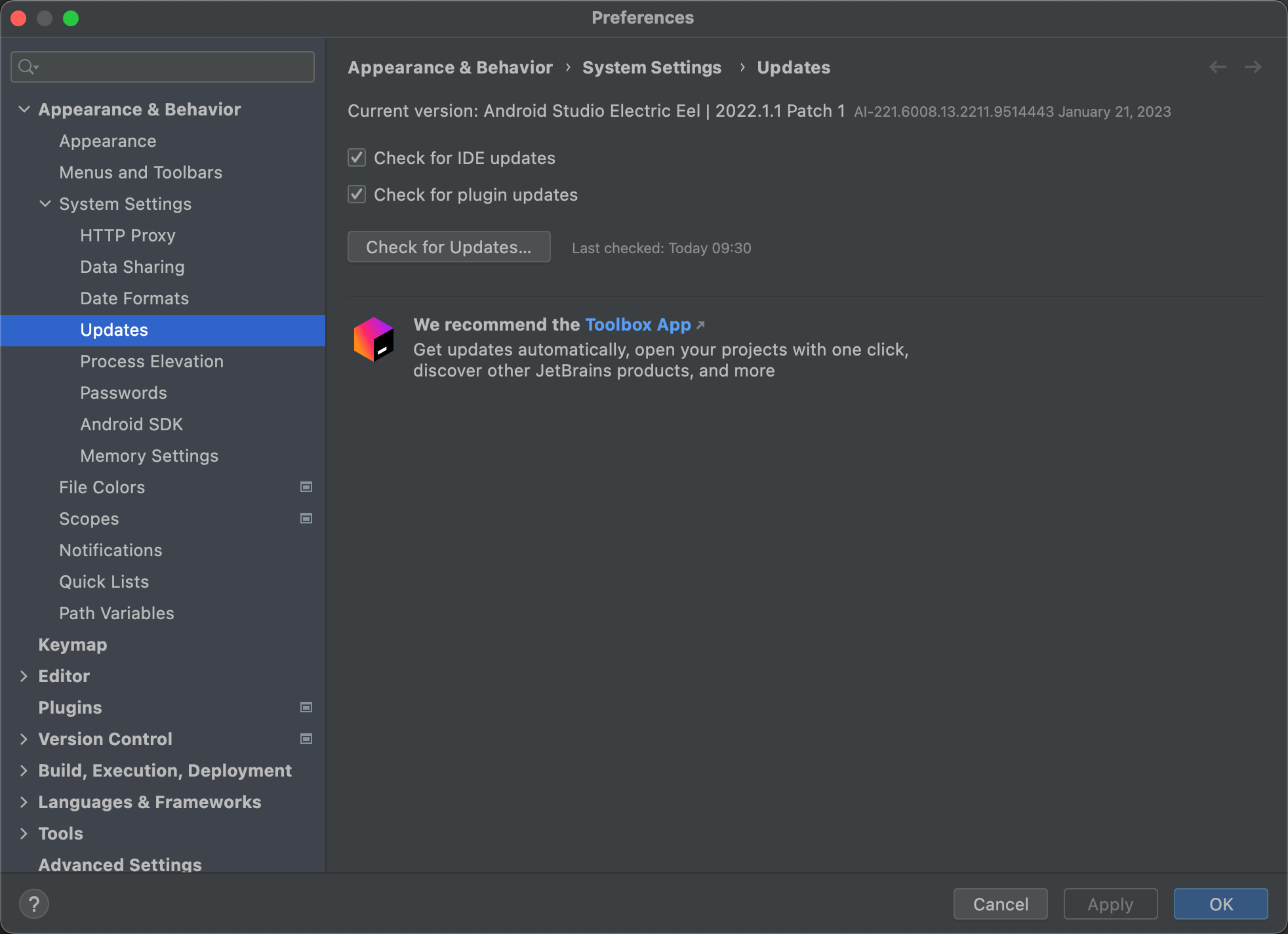
How do I open the sdk manager in the Mac system to download the missing files for android studio
 Zoe
Zoe7 Answers
Just cd into the installed SDK path like this
Where <mac-user> is your username to the MAC
For example:
OLD ANSWER
where <mac-user> is your username to the MAC
For example in my own case, executing the following opens the SDK manager for me
ZoeYou can open the SDK manager in the terminal: android -v
./android is not available now.
The 'android' command is deprecated. For manual SDK, AVD, and project management, please use Android Studio. For command-line tools, use tools/bin/sdkmanager and tools/bin/avdmanager
We could use ./SDK_HOME/tools/bin/sdkmanager instead.
Android Studio Sdk For Mac
It can be found inside Android Studio.See here...
This thread pointed me in the right direction and hope this answer will help other recent visitors like me:
To access sdkmanager:
cd /Users/<mac-user>/<path to sdk folder>/tools/bin && ./sdkmanager
From there, just follow the documentation, e.g.:
cd /Users/<mac-user>/<path to sdk folder>/tools/bin && ./sdkmanager --list
or
cd /Users/<mac-user>/<path to sdk folder>/tools/bin && ./sdkmanager --update
Android Studio Sdk Path For Mac
sdkmanager documentation:
Just go to Android Studio > Tools > AVD Manager
And install/create your simulator

Android Studio Sdk Manager Missing Mac
I'm using Android Studio 3.4.2
The SDK Manager does not show up under the Tools menu, but it is available as an icon on the upper right hand menu. It's a cube with a blue arrow pointing down.
Android Sdk Download Mac